
Building a Custom Web UI for Your OpenClaw Instance
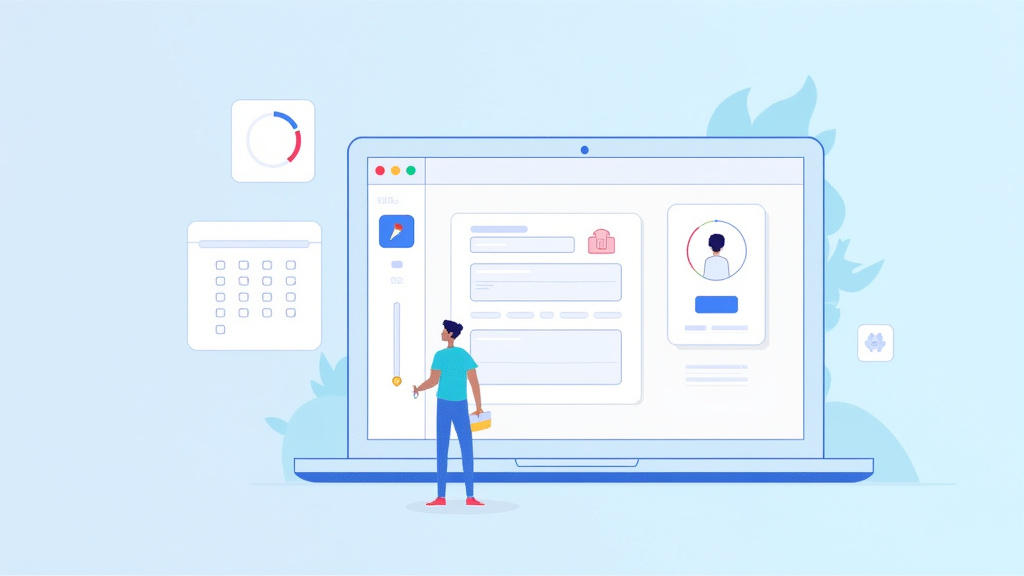
Building a Custom Web UI for Your OpenClaw Instance
Word count: ≈ 2,200
Introduction
OpenClaw gives developers a powerful, decentralized engine for data extraction, video summarization, and automated research. Yet many teams find the default CLI or minimal web console insufficient for their product teams, internal dashboards, or public‑facing portals. Building a custom web UI lets you tailor the look‑and‑feel, enforce role‑based access, and embed OpenClaw capabilities directly into existing workflows. For implementation details, check Openclaw Video Processing Summarize Youtube.
Direct answer (45 words): To create a custom web UI for OpenClaw, choose a modern front‑end framework, set up a secure proxy or gateway, consume the OpenClaw REST endpoints, handle authentication with JWTs, and deploy the bundle to a static host or decentralized network such as IPFS. A related walkthrough is Decentralized Web Openclaw Integration.
Why Build a Custom Web UI for OpenClaw?
- User‑centric experience: Tailor dashboards, forms, and visualizations to the exact needs of analysts, marketers, or developers.
- Brand consistency: Match your corporate style guide, colors, and typography without compromising functionality.
- Fine‑grained security: Implement role‑based permissions, rate limiting, and CSRF protection at the UI layer.
- Extended integrations: Combine OpenClaw outputs with other services—e.g., embed a YouTube‑summarization widget or a chat gateway.
Real‑world scenario: A media monitoring firm needed a dashboard that lets editors paste a YouTube link, see a 2‑minute AI‑generated summary, and instantly push the text to their CMS. The out‑of‑the‑box OpenClaw console couldn’t surface the summary in a rich editor, so they built a custom UI that wrapped the OpenClaw video‑processing API. For a concrete example, see Build Custom Openclaw Gateway Chat Apps.
Planning Your UI Architecture
Before writing a single line of code, sketch a high‑level diagram that includes: This is also covered in Openclaw Automated Web Research.
| Component | Responsibility | Typical Technology |
|---|---|---|
| Front‑end | Render UI, manage state, call APIs | React, Vue, Svelte |
| Gateway / Proxy | Translate UI requests to OpenClaw, enforce auth | Node.js (Express), FastAPI |
| Authentication Service | Issue and validate JWTs | OAuth2 provider, Keycloak |
| OpenClaw Core | Execute plugins, store results | Docker containers, Kubernetes |
| Storage | Persist UI assets, logs, user settings | IPFS, S3, PostgreSQL |
Key decisions:
- Framework choice – weigh ecosystem maturity, TypeScript support, and SSR needs.
- State management – Redux Toolkit, Pinia, or Svelte stores, depending on the framework.
- Deployment model – static site on Cloudflare vs. decentralized IPFS bucket.
Setting Up the Development Environment
-
Install Node.js (v20+) and a package manager (npm or pnpm).
-
Create a project scaffold using the framework CLI. For React:
npx create-vite@latest openclaw-ui --template react-ts cd openclaw-ui npm install -
Add essential libraries:
npm i axios react-router-dom jwt-decode -
Spin up a local gateway that forwards
/api/*to your OpenClaw instance (default port 8080).// gateway.js (Node/Express) const express = require('express'); const { createProxyMiddleware } = require('http-proxy-middleware'); const app = express(); app.use('/api', createProxyMiddleware({ target: 'http://localhost:8080', changeOrigin: true })); app.listen(3001, () => console.log('Gateway listening on 3001')); -
Run both processes concurrently (e.g., using
concurrentlyor npm scripts).
Designing the Front‑End: Frameworks and Components
1. Choosing a Framework
| Framework | Learning curve | TypeScript support | Community plugins | SSR capability |
|---|---|---|---|---|
| React | Moderate | Excellent | Vast (MUI, Ant Design) | Next.js |
| Vue 3 | Gentle | Strong | Element Plus, Vuetify | Nuxt |
| Svelte | Low | Good | SvelteKit UI kits | SvelteKit |
For most teams, React offers the most mature ecosystem, especially when integrating with complex OpenClaw data streams.
2. Core UI Components
- Header & Navigation – shows logo, user avatar, and quick links to “Dashboard”, “Jobs”, “Settings”.
- Job Submission Form – a reusable component that accepts plugin parameters (e.g., a YouTube URL).
- Results Table – paginated, sortable view of OpenClaw job outputs.
- Live Feed – WebSocket or SSE component that streams real‑time status updates.
3. Example: Summarize a YouTube Video
// VideoSummarizer.tsx
import { useState } from 'react';
import axios from 'axios';

export default function VideoSummarizer() {
  const [url, setUrl] = useState('');
  const [summary, setSummary] = useState('');
  const [loading, setLoading] = useState(false);

  const handleSummarize = async () => {
    setLoading(true);
    const resp = await axios.post('/api/plugins/video-summarize', { url });
    setSummary(resp.data.summary);
    setLoading(false);
  };

  return (
    <div>
      <input
        placeholder="Paste YouTube link"
        value={url}
        onChange={e => setUrl(e.target.value)}
      />
      <button onClick={handleSummarize} disabled={loading}>
        {loading ? 'Summarizing…' : 'Summarize'}
      </button>
      {summary && <pre>{summary}</pre>}
    </div>
  );
}
The endpoint called above is demonstrated in the OpenClaw video‑processing tutorial that shows how to summarize YouTube videos—a great reference for understanding required payloads.
Connecting the UI to OpenClaw’s API
OpenClaw exposes a RESTful API for plugin execution, job status, and results retrieval. A typical request flow:
- Authenticate – obtain a JWT from the auth service.
- Submit a job – POST
/api/plugins/{plugin-id}with JSON parameters. - Poll or subscribe – GET
/api/jobs/{job-id}or open an SSE stream for updates. - Fetch results – GET
/api/jobs/{job-id}/output.
Code snippet for authenticated calls
import axios from 'axios';
import jwtDecode from 'jwt-decode';

const api = axios.create({
  baseURL: '/api',
});

// Attach JWT automatically
api.interceptors.request.use(config => {
  const token = localStorage.getItem('access_token');
  if (token) config.headers.Authorization = `Bearer ${token}`;
  return config;
});
Handling Errors Gracefully
| Status | Meaning | UI Reaction |
|---|---|---|
| 400 | Bad request – missing parameters | Show inline validation errors |
| 401 | Unauthorized – token expired | Redirect to login page |
| 429 | Rate limit – too many requests | Display a “please wait” toast |
| 500 | Server error – plugin failure | Show a generic “job failed” banner |
Security Best Practices for Your UI
- Never store secrets in the front‑end. Keep API keys on the gateway side.
- Use SameSite cookies for session tokens to mitigate CSRF.
- Validate all user input before sending to OpenClaw; malformed payloads can crash plugins.
- Implement rate limiting on the gateway to protect the OpenClaw core from abuse.
- Audit third‑party libraries regularly with tools like
npm audit.
For a deeper dive into secure documentation practices, see the guide on best practices for documenting OpenClaw plugins, which emphasizes the importance of versioned API contracts.
Performance Optimization Techniques
1. Caching Responses
- Static assets (CSS, JS) should be served with long‑term cache headers (
Cache‑Control: max-age=31536000). - API results that are immutable (e.g., a completed summarization) can be cached in the browser using IndexedDB or Service Workers.
2. Lazy Loading Components
// Lazy load the ResultsTable only when the user navigates to the /results route
const ResultsTable = React.lazy(() => import('./ResultsTable'));
3. Pagination vs. Infinite Scroll
- For large result sets, server‑side pagination reduces memory pressure on both UI and OpenClaw.
4. WebSocket vs. Polling
- WebSocket offers real‑time updates with lower overhead compared to frequent GET polls.
5. Off‑loading Heavy Computation
- If you need client‑side video preview generation, consider using Web Workers to keep the UI responsive.
Testing, Debugging, and Documentation
Testing Checklist (Bullet List)
- Unit tests for each React component (Jest + React Testing Library).
- Integration tests for API calls using MSW (Mock Service Worker).
- E2E tests with Cypress covering the full job submission flow.
- Accessibility audit using axe-core.
- Performance profiling with Chrome Lighthouse.
Numbered Deployment Checklist
- Run lint and type checks (
npm run lint && npm run type-check). - Generate a production build (
npm run build). - Upload assets to the chosen host (e.g., Cloudflare Pages or IPFS).
- Configure gateway environment variables (OpenClaw endpoint, JWT secret).
- Monitor logs for 4xx/5xx spikes during the first 24 hours.
Documentation
Maintain a README that includes:
- Project overview.
- Setup steps (including the gateway).
- API contract table (request/response schemas).
- Known limitations (e.g., maximum payload size).
For more on keeping docs in sync with code, refer to the article about documenting OpenClaw plugins.
Deploying to Decentralized or Cloud Hosts
Cloud Deployment (Quick)
- Providers: Vercel, Netlify, Cloudflare Pages.
- Steps: Connect Git repo → set build command (
npm run build) → set output directory (dist).
Decentralized Deployment (IPFS)
- Build the static bundle (
npm run build). - Add to IPFS using
ipfs add -r dist. - Pin the CID on a service like Pinata or Infura.
- Configure the gateway to accept requests from the IPFS CID (CORS).
The decentralized web integration guide for OpenClaw offers a step‑by‑step walkthrough of publishing UI assets to IPFS and linking them to a smart‑contract‑based access controller.
CDN Caching
Regardless of host, set Cache-Control: public, max-age=86400 for static files to reduce bandwidth costs.
Advanced Features
1. Real‑Time Chat Gateway UI
By exposing a custom OpenClaw gateway that forwards chat messages to language‑model plugins, you can build a chat application UI that feels native while leveraging OpenClaw’s processing power. The tutorial on building a custom OpenClaw gateway for chat apps details how to route WebSocket messages securely.
2. Automated Web Research Dashboard
Create a dashboard where users input keywords, trigger an automated web research job, and visualize extracted data in charts. The OpenClaw automated web research article showcases how to structure the plugin payload and handle large result sets.
3. Role‑Based Dashboards
Use JWT claims to render different component trees: analysts see raw data tables, managers see KPI charts, and admins get plugin deployment controls.
FAQ
Q1: Do I need to run a separate OpenClaw node for the UI?
A: No. The UI only talks to an existing OpenClaw instance via its HTTP API. You can host the UI on any static server; the heavy lifting stays on the OpenClaw node.
Q2: Can I use the same UI for multiple OpenClaw clusters?
A: Yes. Parameterize the gateway’s target URL and store the cluster identifier in the JWT claims, then switch endpoints dynamically in the front‑end.
Q3: What is the cost difference between cloud vs. IPFS hosting?
A: Cloud providers charge per GB of bandwidth and build minutes; IPFS costs are mainly pinning fees. For low‑traffic internal tools, IPFS can be cheaper, but you lose built‑in analytics.
Q4: How do I handle large video files in the UI?
A: Upload the file to a temporary storage bucket (e.g., S3) first, then send the bucket URL to the OpenClaw video‑processing endpoint. This avoids browser memory limits.
Q5: Is there a way to preview OpenClaw job results before committing?
A: Implement a “dry‑run” mode in your plugin that returns a truncated sample. Your UI can call /api/plugins/{id}?preview=true and display the preview.
Q6: What security headers should I enable?
A: At minimum, set Content-Security-Policy, X-Frame-Options: DENY, X-Content-Type-Options: nosniff, and Strict-Transport-Security.
Conclusion
Building a custom web UI for OpenClaw transforms a powerful backend engine into a user‑friendly product that can be internal‑only or public‑facing. By following the architecture blueprint, selecting the right front‑end framework, securing the gateway, and optimizing performance, you’ll deliver a robust interface that scales with your data needs.
Remember to keep documentation aligned with plugin changes, monitor security continuously, and consider decentralized hosting if you value censorship resistance. With the right foundation, your OpenClaw UI can become the centerpiece of intelligent data workflows across your organization.